For Makers
10 min readWhat Is Handmade? Why the Definition Matters for Your Business
Laura · Co-founder ·
From hand-thrown ceramics to AI-generated prints, 'handmade' covers a huge spectrum. How Luma defines it, what UK law actually says, and which word to reach for when 'handmade' would be a stretch.
Ask ten makers what "handmade" means and you’ll get ten different answers. A ceramicist who hand-throws every piece on a wheel will define it differently to someone uploading stock art to a print-on-demand service. When the word covers both, it stops meaning anything.
And when it stops meaning anything, shoppers stop trusting it. The makers who genuinely put their hands to their work are the ones who lose out.
We’ve heard this from a lot of makers. It came up again and again in the survey that led us to start building Luma: lost sales, undercut prices, and the quiet indignity of seeing your work listed next to something that clearly isn’t handmade at all.
What does handmade mean?
Handmade means the person selling the item made it themselves, using their own hands and their own skill, rather than buying it in finished or having a machine produce it for them.
That’s the plain-English answer, and for most shoppers it’s the whole answer. The complication is that almost nobody works without tools, and tools are where every argument about this starts. A potter uses a wheel. A woodworker uses a saw. Nobody seriously thinks either of those disqualifies the work.
So the more useful definition, and the one we work from, is a question rather than a rule:
If you took the person out of the process, would the product come out the same?
If it would, it isn’t handmade. If it wouldn’t, because their hands and their judgement changed the outcome, it almost certainly is.
The handmade spectrum
Handmade isn’t a yes or no. Most creative businesses fall somewhere along a spectrum.
Fully handmade
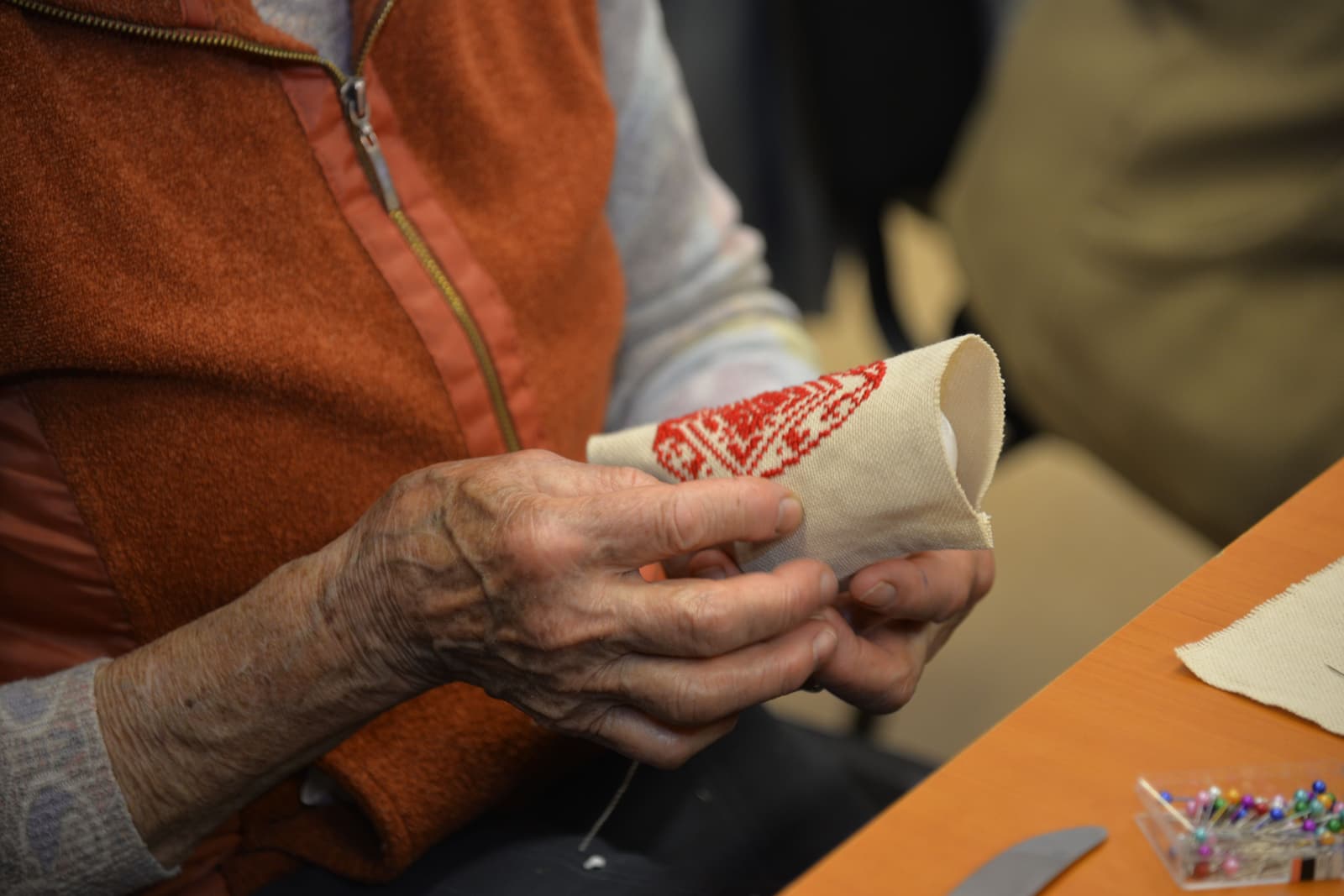
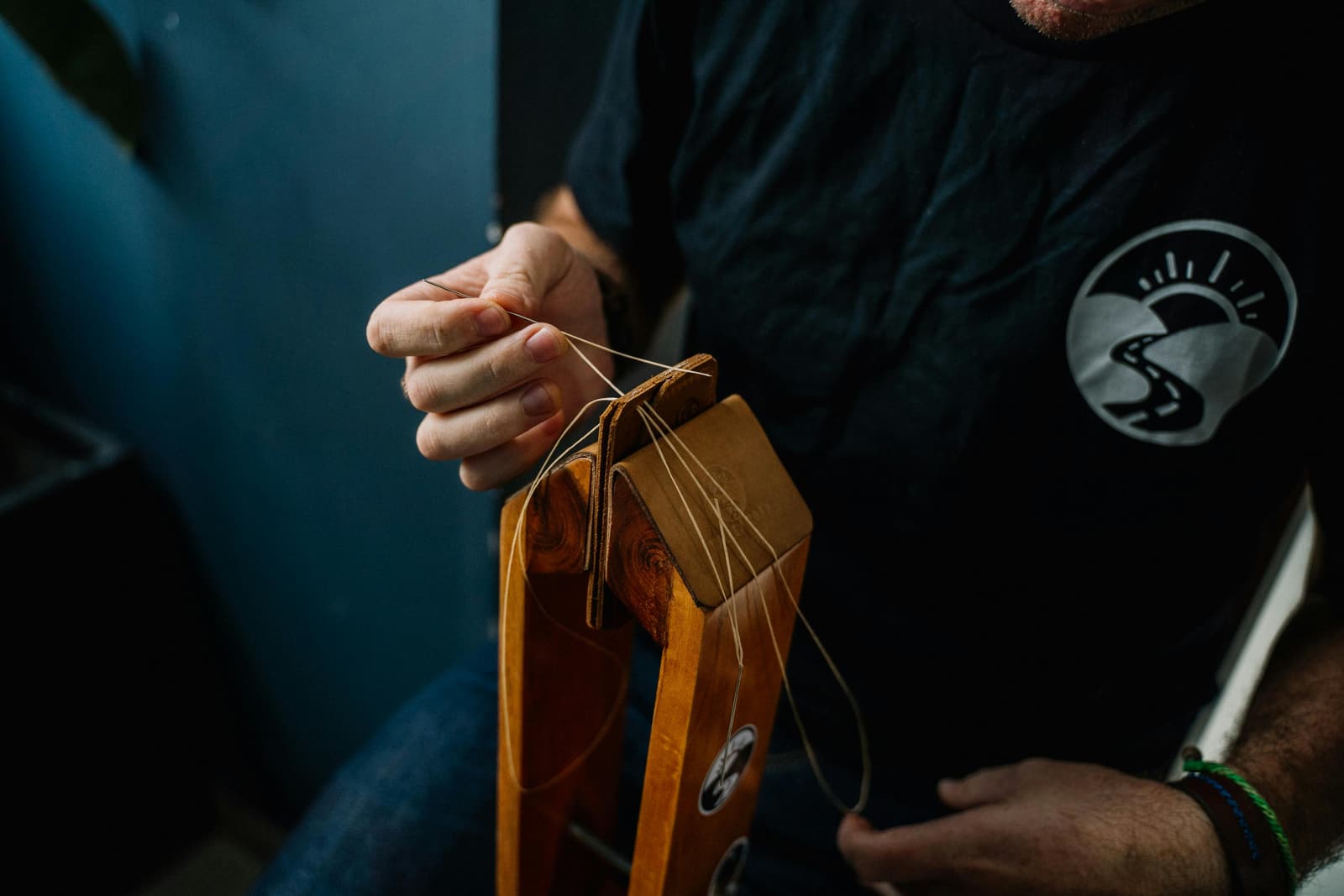
At one end: work where every stage involves the maker’s hands and skill. A hand-thrown pottery mug. A hand-stitched leather wallet. An original oil painting. The material is shaped, joined, or finished by the person who made it, with tools that extend their skill rather than replace it.
These items are rarely identical. That slight variation between pieces is evidence of a human hand.
Designed by the maker, produced with assistance
Most creative businesses end up somewhere in the middle. A leatherworker who designs their own patterns but uses a laser cutter to cut them precisely before hand-stitching everything together. A textile designer who hand-paints original artwork, gets it printed onto fabric at a print studio, then cuts and sews it into cushions. A woodworker who uses a CNC machine for rough shaping and then hand-finishes every piece.
The machine or studio is just a tool. Put any of these through the question above and the answer comes back the same: take the maker out and you don’t get the product.
Print-on-demand
With print-on-demand, a maker uploads artwork and a third-party service handles the rest: prints it, ships it, often without the maker ever touching the product. T-shirts, mugs, phone cases, art prints.
The issue isn’t prints. An artist who prints their own work, stores it, and ships it themselves is involved in the physical process of what they sell. The problem is the fulfilment model: when a third-party service prints and ships without the maker ever handling the product, that’s not handmade, and describing it that way misleads shoppers.
POD is a viable way to sell digital designs. The product just needs to be described honestly: original artwork, artist-designed, digital illustration. Not handmade.
AI-generated
A newer category: images, artwork, or designs created entirely by AI tools, sometimes printed and sold as physical products. Even where a person selects or prompts the output, there is no hand in the making of the design itself.
No credible handmade marketplace should permit it. Shoppers looking for handmade work are looking for human creativity and skill. AI-generated product isn’t that, regardless of how it’s described.
Is there a legal definition of handmade?
No. There’s no statutory definition of "handmade" in UK law, and no body you register with for permission to use the word. You could put it on a label this afternoon and nobody would stop you.
What the law cares about is whether the claim is true.
Describing something as handmade when it isn’t is a misleading commercial practice under the Digital Markets, Competition and Consumers Act 2024, which took over from the Consumer Protection from Unfair Trading Regulations in April 2025. Separately, the Consumer Rights Act 2015 requires goods to match their description, so a shopper who ordered handmade and received something mass-produced has a remedy whatever the listing claimed.
Trading Standards enforce this, and the burden sits with whoever is selling. If you call your work handmade, you should be able to show how you made it.
That’s why our listings ask for a process description in your own words rather than a tick-box, and why you can add photos or a short video of yourself working. A maker who has written down how they work, or filmed a minute of it at the bench, has answered the question before anyone thinks to ask. There’s more on what we look for in how we verify handmade listings.
The words that do more work than "handmade"
Because "handmade" has no fixed meaning, the trade has settled on more precise terms. They come from jewellery, where the distinctions get argued over hardest, but they transfer to almost any craft. Reaching for the accurate one is both more honest and, usually, more impressive.
- Hand-fabricated is the strongest claim. The piece is built from raw stock, meaning sheet, wire, tube, timber or clay, then cut, formed and joined by hand. Nothing arrives pre-shaped.
- Hand-assembled means the components were manufactured and you put them together. The skill is real and it’s yours, but the parts aren’t. Beaded jewellery made with bought-in beads is hand-assembled, not handmade.
- Hand-finished means a machine-made or cast base that you complete by hand: setting, engraving, glazing, painting, sanding, edge-work. The finishing is yours, the form isn’t.
- Handcrafted is the vaguest of the four and usually gets used to mean handmade. Because it carries no agreed meaning at all, it’s the hardest one to defend if someone questions it.
If "handmade" would be a stretch, one of the others is usually exactly right. "Hand-assembled in Sheffield from bought-in findings" tells a shopper more than "handmade" does, and it’s a sentence you can stand behind.
Where Luma stands: hand-fabricated, hand-finished and handcrafted work is all welcome, and we don’t rank one above another. Hand-assembled is welcome when some of the parts are yours, but not when every part came from a factory. Either way, we ask that you name the one you actually do. A shopper who knows they’re buying hand-assembled and buys it anyway is a shopper who comes back. The harm comes from the overclaim, never from the method.
The closest thing to a written standard sits in American law rather than ours. The US Federal Trade Commission’s jewellery guides (16 CFR § 23.2) say it’s deceptive to call a piece handmade unless the entire shaping and forming from raw materials, plus the finishing and decoration, was done by hand labour and manually-controlled methods that let the maker control and vary each individual piece.
That doesn’t apply here, and it only covers jewellery. It’s worth reading anyway, because "manually-controlled methods that let the maker vary each piece" is the same idea as the question further up this page, written by people who had to make it hold up. A hand-guided saw, torch or flex-shaft passes it. A mould that turns out a hundred identical parts doesn’t.
None of this is legal advice. If you’re genuinely unsure where your process sits, your local Trading Standards service advises businesses as well as shoppers.
Why the definition matters for your business
Shoppers come to handmade marketplaces because they want something they can’t find at a high-street shop. They’re willing to pay more, wait longer, and invest in a relationship with a maker they believe in.
When that trust breaks down, when a shopper buys something described as handmade and receives something that’s clearly not, they don’t just return the item. They stop buying from handmade marketplaces altogether.
That’s the problem with "handmade" on most platforms right now.
The shoppers worth finding
The shoppers who genuinely understand what handmade means are also the ones who leave thoughtful reviews, return for custom orders, and recommend makers to their networks. They’re worth attracting. They’re also the first ones to walk away if a marketplace feels like it’s letting anything through.
What Luma’s standard means
Luma is a handmade-only marketplace, and we enforce that through what we require of every listing.
When a maker publishes on Luma, they’re required to describe how they make the item: a genuine process description in their own words. They can also list the materials their work is made from, which most makers do because it tells shoppers exactly what they’re buying.
Both show up on every listing page in a section called "How it’s made," so shoppers can read the making process before they buy.
We don’t permit listings for:
- Mass-produced or commercially manufactured goods
- Print-on-demand products where the maker hasn’t touched the physical item
- Resold or dropshipped goods
- AI-generated designs presented as hand-crafted
We take authenticity reports from shoppers seriously, and a person reviews every case rather than an automated filter.
The standard isn’t meant to be restrictive. If you use a laser cutter for precision in your woodwork, or sew fabric printed professionally from your own artwork, you can sell on Luma, as long as the making or finishing is yours and you’re honest about your process.
Honesty about the process is the core requirement. You can read the full detail in our handmade standards.
Common questions
Is handcrafted the same as handmade?
In everyday use most people treat them as interchangeable, and neither has a legal definition in the UK. "Handcrafted" is the vaguer of the two, which makes it harder to defend if anyone questions it. If your process is genuinely hands-on, "handmade" is the clearer word. If it isn’t, something specific like hand-finished or hand-assembled beats both.
Is print-on-demand handmade?
No. If a third-party service prints and ships the product and you never handle it, you haven’t made anything physical. The artwork can still be entirely yours, and that’s worth saying plainly: original artwork, artist-designed, digital illustration. Just not handmade.
Are AI-generated designs handmade?
No. At best you commissioned it. Writing a prompt is describing what you want to someone else, and the someone else being a model rather than a person doesn’t change who did the making. There’s no hand in it at any point. Luma doesn’t allow AI-generated products.
Does using a machine mean something isn’t handmade?
Not by itself. A wheel, a kiln, a sewing machine and a laser cutter are all tools, and a tool you guide doesn’t disqualify your work. What matters is whether your hands and judgement change the outcome. A machine you set running that turns out identical pieces without you is a different thing.
Do I need permission to call my work handmade?
No. There’s no register, no licence and no trade body to apply to in the UK. You do need the claim to be true, because describing goods misleadingly is unlawful whether or not the particular word has a fixed definition.
If you’ve read this far
You probably care about this more than most, which makes you exactly who Luma is for.
If you make things by hand and you’re thinking about where to sell, take a look at our handmade standards page. It sets out exactly what we look for, including the grey areas.
Tagged: what is handmade, handmade definition, handmade meaning, define handmade, legal definition of handmade, hand-fabricated, hand-assembled, hand-finished, is print on demand handmade, handmade standards, handmade marketplace UK, UK makers, luma market
Written by Laura, co-founder of Luma Market.
Get the next one by email
Occasional notes on what we’re building and what we’re learning. No more than once a fortnight.