Craft Inspiration
5 min readWhy Buying Handmade Matters
Laura · Co-founder ·
A handmade mug costs more than one from a supermarket shelf. Here's what that extra money actually buys.
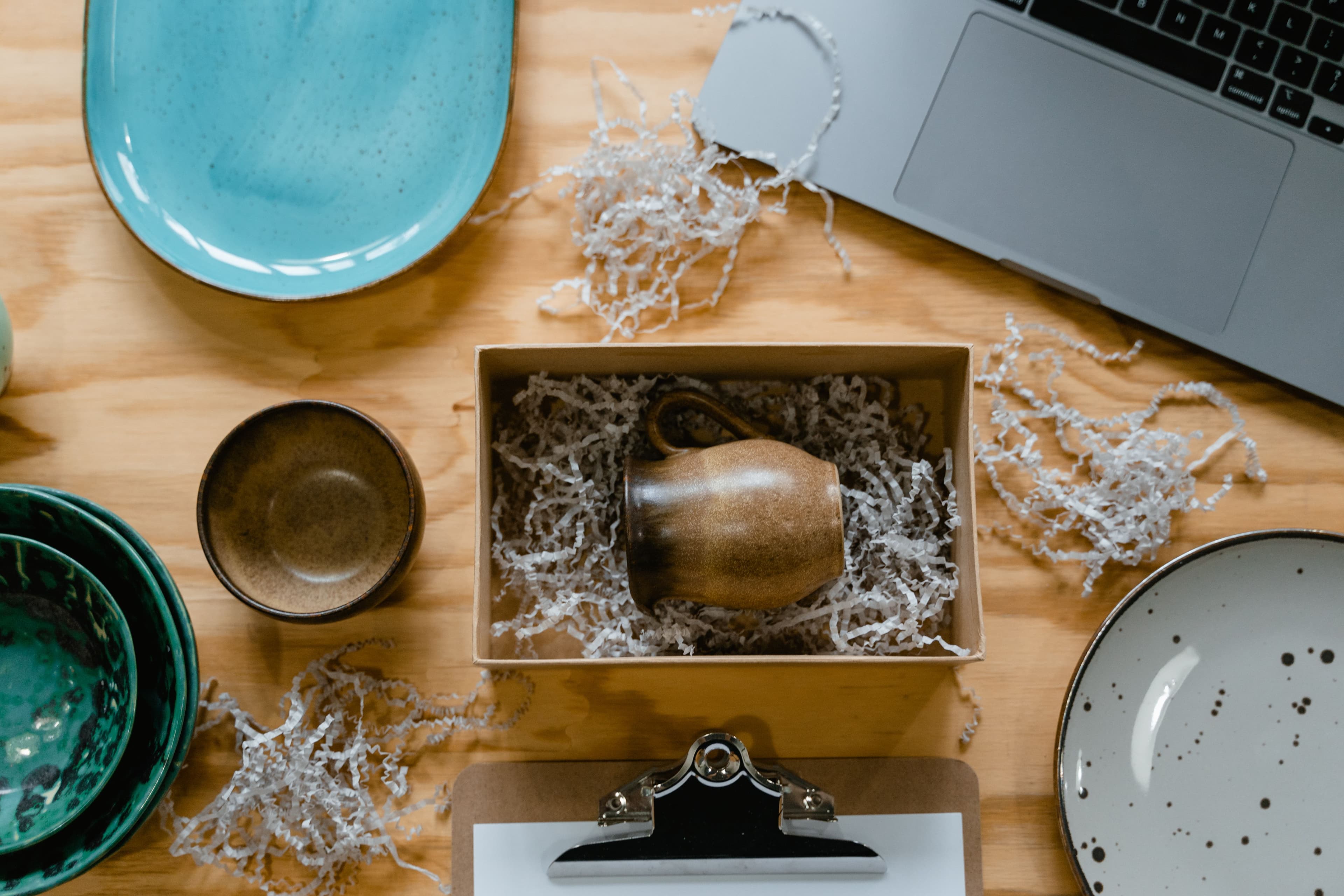
Somewhere in your home there's probably one object you'd rescue first. Not the most expensive thing you own. The blanket your gran knitted. The bowl a friend brought back from a pottery class.
You can't get that feeling from a warehouse. It comes from knowing that a person made this, and that some of their time and care is sitting in your kitchen.
That feeling is the honest answer to "why buy handmade?" But the reasons underneath it hold up to scrutiny too.
You're paying for time and skill
When a mass-produced mug costs £4, that price is the end point of a system built to remove humans from the process. When a hand-thrown mug costs £20, most of that money is buying something completely different: the years it took the maker to learn to centre clay, and the hours they spent on this particular piece.
The handmade version isn't overpriced. The two objects just contain different things. One contains logistics. The other contains a person's working life.
This is also why no two handmade pieces are quite identical. The slight variation, the glaze that pooled a little deeper on one side, is evidence of a hand. Mass production calls that a defect. Making calls it the point.
The money goes to a person you could name
Buy from a maker and your money lands somewhere specific: a workshop in a spare room in Sheffield, a kiln in a garden shed in Fife. It pays for materials from suppliers the maker chose themselves, and it pays a real household's bills.
That has a weight to it that clicking "add to basket" on a faceless product page never will. Small creative businesses are run by people who answer their own messages, wrap their own parcels, and remember who's ordered before. When you buy from them, you become part of how their business survives, and they know it. Plenty of makers will tell you they still feel a small jolt every time an order comes in. Your purchase is an event in someone's day.
Things made to be kept
Fast goods are priced to be replaceable, and they're made accordingly. A handmade object usually comes from the opposite instinct. The maker chose the materials and put their name to the result. Their reputation ships inside the parcel.
We won't pretend handmade is automatically saintly. A hand-poured candle still uses wax and a delivery van. But buying fewer, better things you intend to keep is one of the most straightforward ways to consume less overall, and handmade is built for keeping. Things made with care tend to be worth repairing, worth handing on, worth rescuing first.
You get the story as well as the object
A handmade purchase usually comes with something a barcode can't carry: the maker's account of how it was made. What the material is, where it came from. Sometimes even the flaw they corrected that became the making of the piece.
That story changes how you use the thing. A scarf becomes the scarf made from wool spun in the maker's own studio. A chopping board becomes the one cut from a storm-felled oak. Gifts get better for the same reason. Giving someone a handmade object says you spent thought as well as money, and the story goes with it. A bit better than a gift card, isn't it?
On Luma, every listing includes a section called "How it's made", written by the maker in their own words, sometimes with a video of them talking it through or a glimpse of the piece being made, because we think that story is part of what you're buying. It's also part of how we check that listings are genuinely handmade in the first place.
The honest trade-offs
Buying handmade asks a little more of you.
It costs more than mass-produced, for the reasons above. It's often slower, because the person making your order may literally be making your order. And it involves trusting a small business rather than a returns machine the size of a country.
What you get back is an object with a person in it, made properly, from someone who genuinely cares whether you like it. If something does go wrong, you're talking to the maker themselves.
There's one more catch: not everything sold as "handmade" online is. Mass-produced and dropshipped goods wearing the label are exactly why the word needed defending, and why we built Luma around a handmade standard that every listing is held to. If you're going to pay for the real thing, you deserve to actually get it.
Start with one thing
You don't need to overhaul how you shop. Next time you need a gift, or you're about to re-buy some everyday object for the third time because the last two didn't survive, try the handmade version once. Read how it's made, and see how differently the thing arrives.
Our bet is that it ends up being the object you'd rescue first.
Tagged: why buy handmade, benefits of buying handmade, handmade gifts UK, support small makers, sustainable handmade goods, conscious shopping, handmade marketplace UK, luma market
Written by Laura, co-founder of Luma Market.