For Makers
11 min readWhere to Sell Handmade Online in the UK: Every Option Compared
David · Co-founder ·
Etsy, Folksy, Not On The High Street, Amazon Handmade, the newer UK marketplaces, your own website and craft fairs. What each one costs, who it suits, and what to ask before you open a shop.
There are more places to sell handmade in the UK than there were five years ago, and they work in quite different ways. Some let anyone open a shop in ten minutes. Some read your application first. Some charge a monthly fee, some take a cut of each sale, and a few do both.
This guide goes through the main options, what each one costs and who it suits. One thing to say up front: we run Luma Market, which is one of the options below. We’ve tried to describe every platform the way its own pages describe it, us included, and every fee was checked on the platform’s own site on 5 October 2026, apart from the figures a platform only gives on application, which we’ve marked. Fees change, so check again before you sign up.
The short version
| Platform | Who can sell | What you pay |
|---|---|---|
| Etsy | Anyone, worldwide | $0.20 a listing, 6.5% on the item and postage, card processing, and 12–15% offsite ads (compulsory above $10,000 a year) |
| Amazon Handmade | Approved artisans | 12.24% a sale; the £25 monthly plan fee is waived after the first month |
| Folksy | UK-based makers and designers | 6% + VAT commission, plus 15p + VAT a listing or £7.50 a month |
| Not On The High Street | UK-registered small brands, by application | One-off joining fee and commission, confirmed when you apply; sellers report £199 + VAT and 25% |
| Crafter’s Market | UK-based makers | Free with 5% commission for up to 10 products; £5 or £10 a month for 0% commission and 50 or unlimited products |
| The British Craft House | Makers in Great Britain, by application | £18 a month for 75 products, plus 7.2% commission (VAT included) |
| Luma Market | UK-based makers, by review | 7% commission, no listing or monthly fee, card processing 1.5% + 20p |
| Your own website | You | Shopify from £19 a month, plus 2% + 25p a card payment |
| Craft fairs | Whoever books a pitch | A pitch fee per event, no commission |
Card processing (usually Stripe or PayPal) comes on top on most of these, and it’s worth reading each platform’s own fee page for the details.
Price is half of it. What else sits in the same search as your work, and whether anyone looked at a shop before it opened, is the other half.
| Platform | What can be sold | Checked before you open? |
|---|---|---|
| Etsy | Handmade, including designs made up by a production partner or with AI tools, plus vintage over 20 years old, craft supplies and digital files | No |
| Amazon Handmade | Handmade by you or a team of up to 20; no resale | Application |
| Folksy | Handmade by you or your own design, plus craft supplies, handmade or bought in; no vintage or resale | No |
| Not On The High Street | Made in the UK, or altered or personalised in the UK; not handmade-only | Application |
| Crafter’s Market | Handmade by you or your own design (printed elsewhere is fine), plus craft supplies, handmade or bought in; vintage only if transformed; no AI | No; sampled and report-driven after |
| The British Craft House | Handmade by you, upcycling case by case; no vintage, resale or supplies | Application, curated |
| Luma Market | Made by you, nothing else: no supplies, vintage, resale, digital files, print-on-demand or AI | A person reviews every shop, then daily sampling and reports |
Open marketplaces
Open marketplaces let you start straight away and put you in front of the biggest audience. The trade-off is competition: you’re listed alongside everyone else who sells something similar, handmade or not.
Etsy
The one everyone knows, and still the biggest audience for handmade. For UK sellers there’s a $0.20 listing fee on each item (charged in US dollars), a 6.5% transaction fee on the item and postage, card processing, and offsite ads at 12–15% of a sale they bring in, which become compulsory once you pass $10,000 in a year. Since 2024 Etsy has sorted items under four labels: Made by, Designed by, Handpicked by and Sourced by a seller, so print-on-demand and designs made with AI tools sit in the same marketplace as work made by hand.
Suits you if you want the widest reach and you’re happy to compete on photos, price and search. Check Etsy’s own fee page for the current figures.
Amazon Handmade
Amazon’s handmade section, with its own application. Approved sellers pay a 12.24% referral fee on each sale, and Amazon waives the monthly selling plan fee after the first month. You get Amazon’s traffic and its checkout.
Suits you if your work suits gift buyers who already shop on Amazon, and you’re comfortable with Amazon’s rules on delivery and returns.
UK marketplaces
These are smaller than Etsy and only take UK sellers, so the shoppers who find them are usually looking for UK-made work. Several of them read your application before you can sell.
Folksy
Running since 2008 and describing itself as the UK’s biggest online craft fair. It takes original handmade or designed products from UK-based sellers, plus craft supplies. On the Basic plan you pay 15p + VAT a listing and 6% + VAT commission. Plus costs £7.50 a month or £75 a year, makes listings free, and keeps the same commission. Payments come through PayPal, so you’ll need an account.
Suits you if you want a long-established UK craft community and a pay-as-you-go option.
Not On The High Street
A curated marketplace for small UK brands, known for gifts. You apply with photos of your products and they review it, which takes at least a week. There’s a one-off joining fee, no renewal fee and commission on each sale. NOTHS doesn’t publish the figures and confirms them when you apply; sellers widely report £199 + VAT to join and 25% commission. It isn’t handmade-only.
Suits you if you have a polished, giftable range and you’re ready to treat it as a brand.
Crafter’s Market
A UK marketplace for crafters, makers and designers, run from Bristol. The Basic plan is free, takes 5% commission and allows up to 10 products. Plus is £5 a month or £50 a year for up to 50 products, and Premium is £10 a month or £100 a year for as many as you like; neither takes commission. There are no listing fees on any plan, and card processing through Stripe is 1.5% + 20p. It takes work handmade by you or to your own design, even if printed elsewhere, plus craft supplies whether handmade or bought in; vintage is allowed only once it’s been transformed, and AI-generated designs aren’t. Shops aren’t reviewed before they open; it moderates by sampling listings and reading reports.
Suits you if you want a small, low-cost UK marketplace with no upfront commitment.
The British Craft House
A curated marketplace for independent makers working in Great Britain. You apply with photos of your work, and not every application is accepted. Plans start at £18 a month for up to 75 products, with 7.2% commission on top (VAT included) and a 14-day free trial. Vintage, resale and craft supplies aren’t allowed.
Suits you if you want a curated, editorial-feeling shop and you’re comfortable with a subscription.
Luma Market
This is us. Luma is a UK marketplace for work made by the person selling it, and one of us reviews every shop before it opens. We judge the effort that went into the work and whether it was yours, never how skilled you are, so a beginner is as welcome as someone with thirty years behind them. Every listing has to say how it was made before it can go live, and digital downloads, resold stock, print-on-demand and AI artwork aren’t allowed. We take 7% commission on each sale, with no listing fee and no monthly subscription; card processing through our payment provider (Stripe) is 1.5% + 20p on top. Orders go to England, Scotland and Wales for now.
Here, every listing tells a shopper how the piece was made, in your words, before they buy. Nothing in the search beside it is bought-in stock, a bulk supply or a design run off elsewhere, because a person looked at every shop before it opened and we keep sampling after. Shoppers arrive already trusting that you made it.
We’re new. Makers are opening shops first and shoppers are arriving after, so the audience is still growing. How Luma is different from Etsy sets out the rules in full.
Suits you if you want to sell among people who make what they sell, where volume sellers can’t drown you out and being open about how you work moves you up.
Your own website
A Shopify site starts at £19 a month on annual billing (£25 month to month), plus 2% + 25p a card payment on the Basic plan. There are cheaper builders, and selling through Instagram or TikTok costs nothing to start. You keep every customer relationship and nobody else’s rules apply.
The catch is traffic. A marketplace brings shoppers to you, and your own site only gets the visitors you send it, so a website tends to work best beside a marketplace shop.
Suits you if you already have a following, or you want a home that no platform change can take away.
Craft fairs and markets
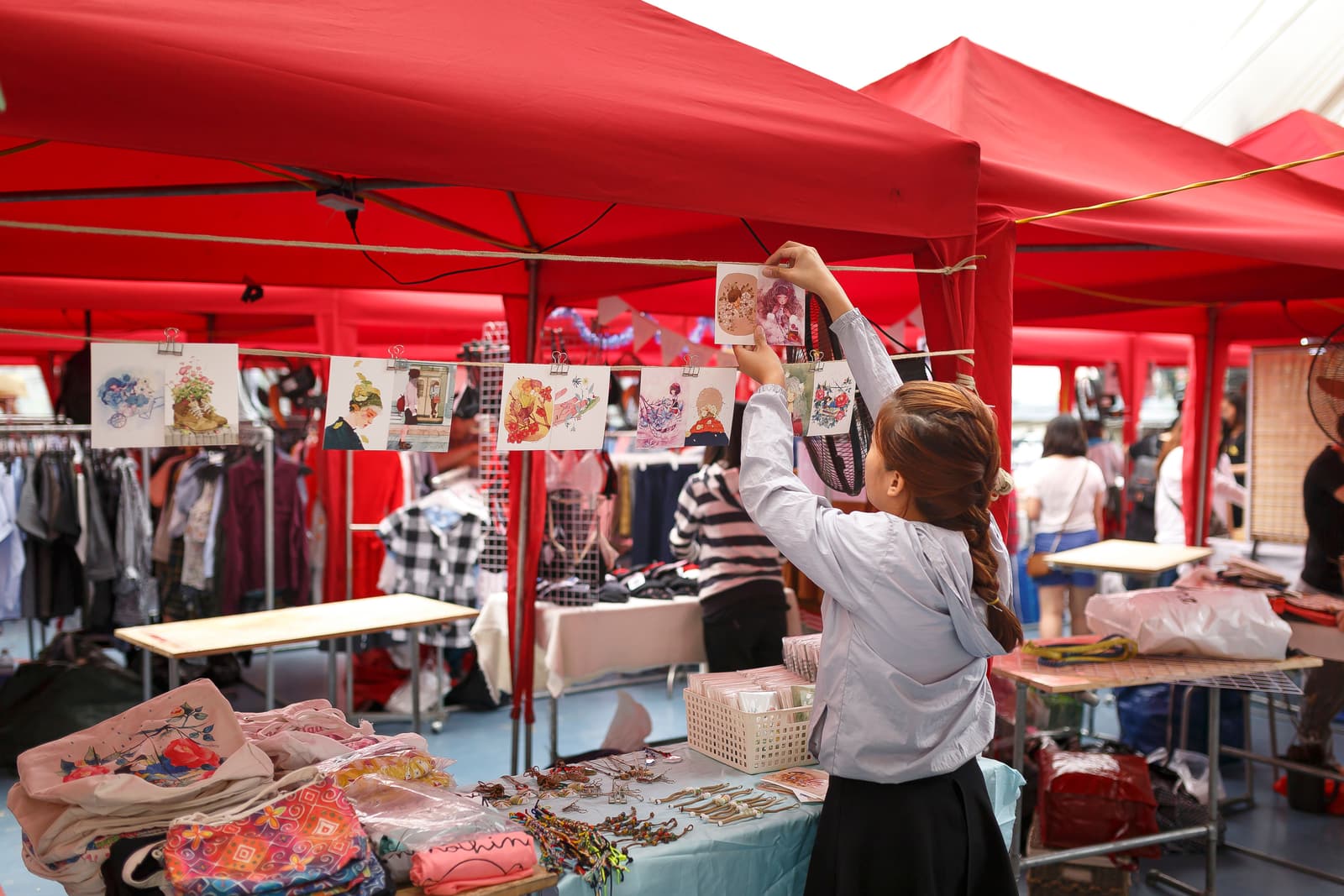
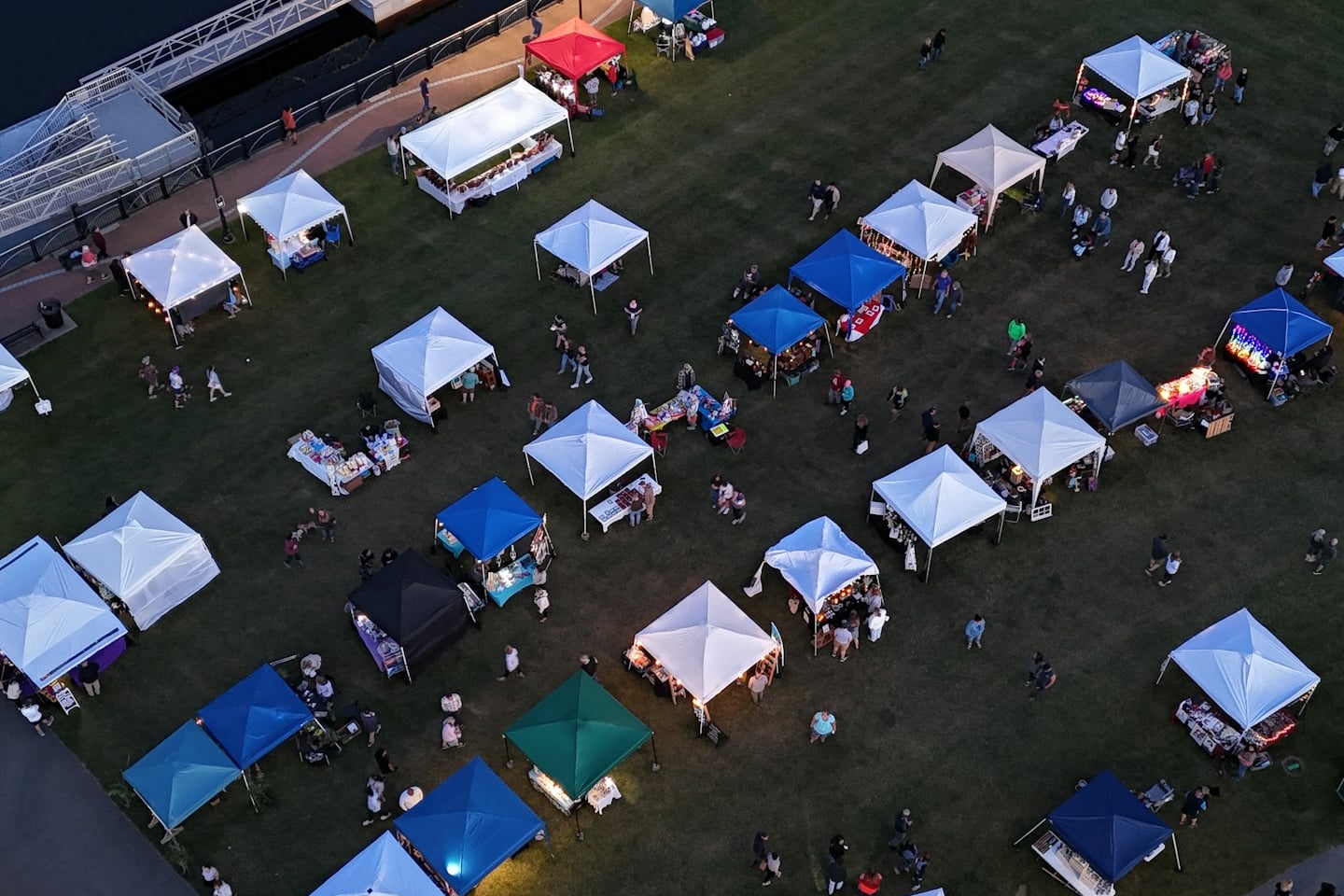
The oldest way to sell handmade. You pay a pitch fee per event, there’s no commission, and you meet the people who buy your work. It costs you a day, and stock that doesn’t sell has to come home with you. Fairs work well alongside an online shop: a card with your shop name on it turns a browser at the stall into an order a month later.
Suits you if your work sells better when people can pick it up.
How to choose
The best place to sell handmade online in the UK depends on what you need most right now.
- Reach: Etsy and Amazon have the biggest audiences, and the most competition.
- Low cost while you’re starting: commission-only platforms charge nothing in a month with no sales. A flat monthly fee costs the same whether you sell or not, and gets cheaper per sale as you grow.
- Being seen as handmade: the curated UK marketplaces review sellers before they open, and some only take work made by the seller.
- Control: your own website.
You don’t have to pick one. A marketplace shop, a website and a stall at a few fairs a year can all run at once, and each one feeds the others.
Common questions
What is the cheapest place to sell handmade online in the UK?
It depends on how much you sell. Commission-only marketplaces, such as Crafter’s Market on its basic plan or Luma Market, cost nothing in a month with no sales. A monthly subscription, such as Folksy Plus or a Shopify site, costs the same whether you sell or not, so it works out cheaper per sale once you sell regularly. Add the card processing fee to either before comparing.
Which UK marketplaces only accept handmade?
Luma Market and The British Craft House take handmade work only. Crafter’s Market and Folksy take work handmade by you or to your own design, and both also sell craft supplies, including bought-in ones. Not On The High Street sells more than handmade, and Etsy also sells vintage, supplies and digital files.
Can I sell on more than one platform at once?
Usually, yes. Check each platform’s terms first, then keep your stock counts up to date everywhere so you don’t sell the same piece twice. Luma’s terms don’t ask you to sell only with us, and we’d encourage you to take a stall at local markets and craft fairs too.
Do I need my own website to sell handmade?
No. A marketplace shop is enough to start, and you can add a website later, once you have customers to send to it.
Tagged: where to sell handmade UK, best places to sell handmade online UK, sell handmade online UK, UK handmade marketplaces, Folksy, Not On The High Street, Amazon Handmade, sell crafts online UK
Written by David, co-founder of Luma Market.
Get the next one by email
Occasional notes on what we’re building and what we’re learning. No more than once a fortnight.